The culture of Fakarava consists mainly of a strongly engrained Polynesian heritage, mixing ancestral traditions, community life and a deep connection with the ocean.
The ocean is at the heart of Fakarava's cultural life. Lagoon and high-sea fishing, practised for generations, is not only an economic activity but also an ancestral knowledge transmitted from parent to child. Either we fish with a reel or a harpoon, and we go there either by canoe, kayak or boat. After the session, we grill the caught fish or we will sell them.

Local culture is mainly transmitted through orality. The inhabitants perpetuate traditional know-how such as the braiding of pandanus leaves, the manufacture of handicrafts... In July, the atoll organises a small "Heiva" that highlights some of these practises. We find the coconut shelling race, the fruit litter race, the coconut tree climb race and the competition for the heaviest fish caught. These practises reinforce cultural identity and a sense of belonging to the community.

Before the Christmas and summer holidays, the village organises dance shows with the participation of schools. At Fakarava, dance is a living cultural expression, deeply linked to history, nature and community life. Inspired by Polynesian dances, the choreographies mix hip movements, arm gestures and foot strokes to tell everyday scenes: the sea, fishing, legends, love or respect for ancestors. Accompanied by songs, percussion and sometimes ukulele, the dance rhythms religious festivals, family celebrations and cultural events. Costumes, often made from natural fibres, shells and flowers, strengthen the bond with the environment.

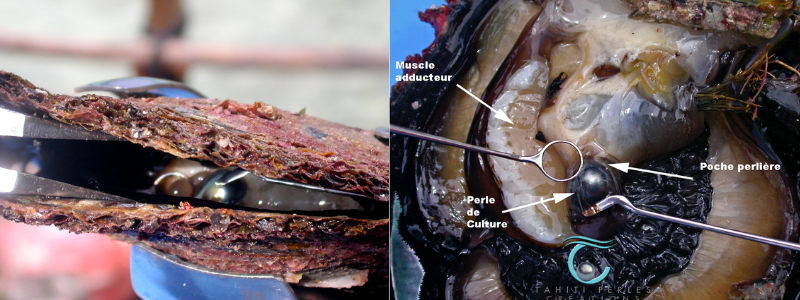
There is also the ageing of the black pearl. The pearl farmers raise the oyster Pinctada margaritifera for several years on submerged lines, before transplanting, a technical gesture carried out by qualified transplanters who insert a nucleous into the oyster. It is then placed back in the lagoon for a period of 18 to 24 months, during which it is regularly cleaned and monitored to promote the formation of a pearl with intense luster and deep colours, often characteristic of Fakarava. The harvest gives rise to a rigourous sorting, only a small part of the pearls reaching a gem quality. The most emblematic brand of the atoll is Havaiki Pearl, a family pearl farm recognised for the quality of its production and its environmentally friendly approach, alongside several small local farms often without a commercial sign, which nevertheless contribute strongly to the economy and cultural identity of the atoll.

Finally, the practice of « coprah » occupies a more discreet place than pearl farming or tourism, but it remains an important traditional activity, inherited from several generations. Copra is derived from the coconut, from which the almond is extracted and then dried, mainly from the coconut trees planted on the motu of the atoll. The inhabitants harvest the ripe nuts, open them manually and let the almond dry in the sun or in small artisan driers, a physical and regular work that depends heavily on climatic conditions. Once dry, the coprah is sached and then transported by boat to Tahiti, where it is bought back by processing organisations for the production of coconut oil and derivatives.

Créez votre propre site internet avec Webador